fading smile
goodbyes are never easy
old friend


fading smile
goodbyes are never easy
old friend

Congratulations to Roxanne Rhoads of Bewitching Book Tours, who entered our contest via Instagram with this winning haiku:


restless spirits
pressing on the veil wall
all hallows eve
To see more artwork by Unid Color please go here.
Happy Halloween!
Share an original and scary Halloween or horror-related haiku from October 31st through November 2nd, using the hashtag #Halloweenhaikuchallenge for a chance to win an awesome $25 gift card from Dark Delicacies in Burbank, CA.
Here are the details:
Contest Locations
There are three ways to share your haiku:
Judging Criteria
1) Originality. (you must be the sole author of the haiku you post, no exceptions)
2) Scares. The scarier the better! It is Halloween after all.
3) Style. All haiku, senryu, zappai are eligible and fall within the usual standard 17 syllables (5-7-5). Sorry, Tanka or any other style of poetry is not acceptable for purposes of this contest. We’re not hating, just a matter of space and time.
4) Participants may post up to three haiku for consideration.
The Prize
The winner, chosen by November 4th, will be gifted a $25 gift card only to Dark Delicacies in Burbank, CA, an amazing specialty bookstore, dedicated to all things horror related, and recently named one of the top ten bookstores in Los Angeles by Travel.com website.
Disclaimer
All works are copyright of their respective owners. By participating in this contest, you agree that Halloween Kristy can use your haiku to further promote this contest and www.halloween-haiku.com on social media (Twitter, Instagram, Pinterest, etc.) Unauthorized use, modification, reproduction or distribution of copyright poems entered into 2019 Halloween Haiku Challenge without express written permission from the copyright owner is strictly prohibited.
Halloween Kristy reserves the right to remove and discredit any haiku and/or images posted here or on social media containing plagiarized or copyrighted material, pornography, vulgarity, racist, sexist or bigoted views.
Author, illustrator, storyteller, and filmmaker Steven Soenksen a.k.a. Gris Grimly grew up inspired by classic horror films, comics, art, and all the great horror writers like Edgar Allan Poe, Edward Gorey, and H.P. Lovecraft. After college, he moved to Los Angeles and fell into illustrating children’s books and built a successful reputation for his dark yet whimsical characters. Grimly was hired to draw illustrations for retellings of classic stories, such as, The Legend of Sleepy Hollow, The Halloween Tree, Wicked Nursery Rhymes, Pinocchio and Frankenstein, a story which holds personal meaning to him.
In 2005, Grimly wrote, produced and directed a horror short called Cannibal Flesh Riot! with his good friends, which received good reviews and toured the festival circuit that year. The film’s success led to other opportunities, making other short films and music videos, including a video for Texas psychobilly fiends, Ghoultown, starring the Mistress of the Dark herself, Elvira.

Artist: Gris Grimly
Where to Purchase Goods: horror conventions, specialty stores, special events, and online store (although temporarily closed as of October 2019, while it’s being revamped, check back later)
Website: http://www.madcreator.com/ or http://grisgrimly.com/
Social Media: Instagram- https://www.instagram.com/grisgrimly/
Twitter- https://twitter.com/GrisGrimly
Why we love them: Handsome, rock-a-billy, tattoed and super talented, what’s not to love? I’ve met Gris Grimly a couple of times at horror conventions and he’s incredibly nice. He recently moved his family back to the home state of Nebraska and looks like, he’s already working on a new book. I can’t wait to read it.

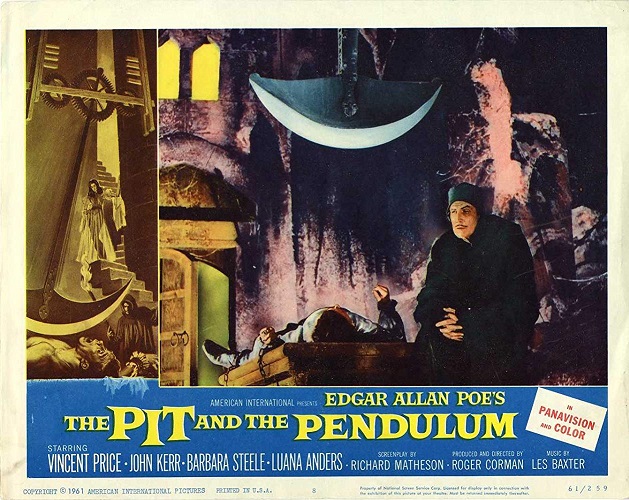
The Pit and the Pendulum (1961)
No one shall ever enter this room again.

Pit and the Pendulum was a film of many seconds for director Roger Corman. It was the second film adapted from an Edgar Allan Poe story, written by author and screenwriter Richard Matheson, who penned such successful novels such as I am Legend and the Incredible Shrinking Man. It was second big hit for distributor American International Pictures, grossing over $2 million USD from a measly $300,000 budget. It was also the second time that Corman would work with Vincent Price and Barbara Steele, each of whom would go on to become horror icons based on their work in numerous horror films.

Loosely based on Edgar Allan Poe of the same name, the story revolves around a tenacious Englishman Francis Barnard who goes to foreboding castle in Spain, after hearing word that his sister Elizabeth has died. He confronts his brother-in-law Don Nicholas Medina, demanding to know how she died. While there, Barnard finds the grieving don is slowly losing his mind, convinced that his late wife is haunting the castle, a site once used in the Spanish Inquisition. The don’s sister and personal physician try to sooth Barnard’s suspicions that Nicholas had anything to do with the sister’s death by revealing the tragic childhood trauma (shown in color-tinted vignette style flashbacks) that inflicts the don, but as the dark night drags by, it becomes apparent that a more sinister plot is afoot.

Richard Matheson creates magic here by fleshing out the Poe’s torture chamber story bringing in the doomed Don Nicholas Medina, who already believes he’s cursed with same madness that drove his father to inflict unspeakable horror on the Spanish population, as well as his own family. In some ways, Matheson’s story is better than Poe’s gothic tale, giving audiences a backstory into understanding the horror the Poe wrote about.


The Merchant of Menace, Vincent Price, is at his best here, playing both a grieving man losing his sanity and his sinister father in flashbacks. His acting is somewhat melodramatic but entirely encouraged by dark dreamy orchestral score by Les Baxter. The always beautiful and haunting bright eyes of Barbara Steele turn in another wicked performance, cementing her legacy as a horror vixen, and John Kerr, Luana Anders and Antony Carbone also give strong memorable performances.


Despite the low-budget, Corman’s gothic adaption looked like million dollar film, with its vibrant color, gorgeous costuming, intricate set design, and carefully planned wide-angle shots by Floyd Crosby, the lusciously filmed Pit and the Pendulum only took 15 days to film. Shot entirely on a sound stages in California, Corman’s meticulous pre-production with his team, in particular, set designer, Daniel Haller, who created a real pendulum for the movie’s nightmarish ending sequence. The imposing pendulum was 18-feet long, weighed over 2,000 lbs and hoisted thirty-five feet in the air at the top of the sound stage above the actors. The blade was made of rubber, but a real metal blade covered in steel paint was switched out for the close shots, giving John Kerr some serious anxiety, which shows in his perspiring face during the final scenes.
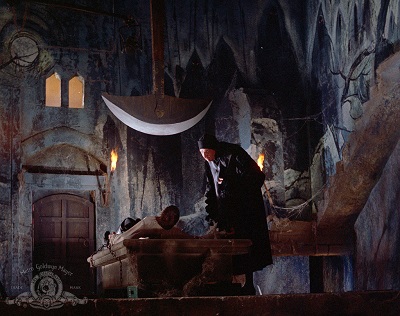
This is my favorite Roger Corman and Vincent Price collaboration. It’s the scariest and best overall production, an absolute epitome of gothic horror, inspiring dozens of other filmmakers, from Hollywood to the Italian gallo films of the 60s. Horror at that time was changing in a way that the scares were no longer implied. Horror master Stephen King remembers the Pit and the Pendulum scene which Price’s don Medina finds the decayed corpse of his dead wife, as having changed the horror landscape, King says “the most important moment in the post-1960 horror film, signaling a return to an all-out effort to terrify the audience…and a willingness to sue any means at hand to do it.”
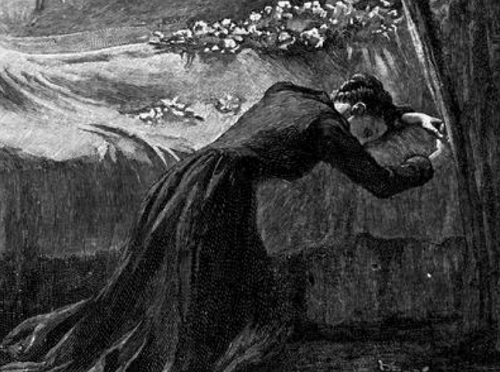
night howls
serve the master
children of the night
Happy National Pumpkin Day!
Pumpkins are the most important element of the Halloween season. It is the symbol of Halloween itself. Pumpkin desserts have been getting a bad rap lately because of pricey, syrupy pumpkin spice drinks served at the coffee place that shall not be named, but pumpkins themselves are quite healthy, being high in potassium, vitamin C, fiber and antioxidants. So, remember to look up some creative ways to use leftover parts of your carved pumpkin this weekend.
Cooking Classy knows the perfect way to end the Halloween season with this fangtastic recipe for Pumpkin Pie Crumb Bars.
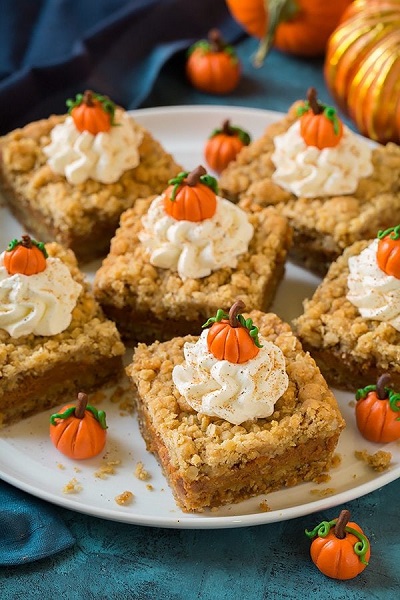
For the full recipe and baking instructions, please go here: https://www.cookingclassy.com/pumpkin-pie-crumb-bars/


Spice up your Thanksgiving by serving these crumb bars instead of boring ole pumpkin pie. Your family will thank you.
Today is the last Friday in October, which means it’s National Frankenstein Friday! Weary from the work week? Well, give your system a jolt with a spookalicious drink to kick off the last big weekend of the Halloween season. Miss Information teaches us that science can be fun with this freaky good Frankenstein Cocktail.

For full mixing instructions, please go here: https://www.missinformationblog.com/halloween-cocktails/


Hey all you scientists, if you prefer your monsters to be a little more green (or blue or purple or whatever), a dab of food coloring should help.


You must be logged in to post a comment.