
Artist: Jane Crowther
Company: Bug Art Cards
Social Media: https://www.facebook.com/bugartcards
Shop: http://bugart.co.uk/

Artist: Jane Crowther
Company: Bug Art Cards
Social Media: https://www.facebook.com/bugartcards
Shop: http://bugart.co.uk/
According to German folklore, December 5th is the day that Krampus visits all the naughty children and whips them for misbehaving, gives them lumps of coal, or steals them away to eat them later. You gotta be really, really bad to have the latter happen. You might not agree with the methods of Santa’s evil twin, but you gotta admit, he gets results, even the adults act a little better during the holidays. Besides, Santa doesn’t really like being the bad guy, and all that coal weighs down the sleigh. Better to outsource a job like that.
These days, we hold annual balls and festivals in honor of Krampus, who’s now more a whimsical dark hero to us misfits.

Artist: Diana Levin
Company: Ghoulish Bunny Studios
Social Media: https://twitter.com/ghoulishbunny or https://www.instagram.com/ghoulishbunnystudios/
Shop: https://www.ghoulishbunnystudios.com/shop

red cardinal
fresh pine in my living room
lost home
Today, I’d like to give thanks for all the Halloween fans and curious souls who have stopped by my little web blog to share in the love for Halloween. Be sure to check us out in December, when we’ll celebrate the dark and spooky side of the holidays.
cold mashed potatoes
longing a familiar voice
ghosts of november
Since November’s Friday falls on the day after Thanksgiving, I’m breaking my own rule and posting a recipe this week.
Let’s be honest, next to green bean casserole, cranberry sauce is the least desirable dish on the holiday table. I suspect that’s because it’s so plain. Well, I found a recipe that might spruce up the trimmings, thanks to the good people over at Gimme Some Oven and their recipe for Cranberry Crisp.


For the full recipe and baking instructions, please go here: https://www.gimmesomeoven.com/cranberry-crisp/

Now, instead of a boring side dish, you can serve a sweet and healthy dessert. Add a scoop of vanilla ice cream to really make it pop!

Well, it’s happened. Another Halloween season has come and gone, and it’ll be 11 long months until our favorite holiday comes back around. Post-Halloween Depression is real. There never seems to be enough time to do all the things we want to do during the month of October. While it’s easy to fall into the trappings of woulda, shoulda, coulda, guilt never brought back Halloween any sooner. If you have a serious issues, get help. Young folks, talk to someone. For reals. Maybe you suffer from Seasonal Affective Disorder. This is the loneliest time of the year and it doesn’t have to be.
If you think you got a handle on it and you’re just looking for ways to squeeze the spookiness outta the holidays. Here’s a few helpful tips:
Find Your Tribe
Life is simply too short not to hang with people who don’t engage your interest, inspire your creativity or support your vision, even if it’s just turning your front yard into a cemetery every October.
Halloween groups on Pinterest, Reddit and Facebook are great places to find likeminded fans. Commiserating with others helps us not feel so alone, and trust me, you are not the only one who cannot bear to watch Freeform’s sugary programming on repeat for the next two months.

Shop ’til You Drop
Don’t put away that credit card just yet because shopping for Halloween items is even better after Halloween. This is the time when stores are blowing out their stocks and have slashed prices from 50-80% off. Spirit stores, Michaels, Joanns and World Market, just to name a few, all have big sales still going on. Never underestimate the power of retail therapy.
Scare up Your Next Halloween
There’s no time to cry when you’re a notebook deep full of ideas for next Halloween, and next year is gonna be a doozy. Halloween 2020 will be on a Saturday, there’ll be a full moon and that’s also the day we set our clocks back. Sounds auspicious already!


Let Autumn Linger
I don’t understand why people insist on rushing into Christmas when we have the beauty and wonder of the harvest to celebrate. Pumpkins, scarecrows, fall leaves, much of what we love about Autumn is what we love about Halloween, and nothing is better than natural spookiness of fall.

You can always decorate with autumn lights and harvest candles. Hang a fall wreath on the front door or somewhere over the mantle. Instead of the Christmas tree, put up an autumn tree during the month of November. Check out this fantastic autumn home decor from All for Fall & Halloween member Megan Sanders:


Give Thanks to Dark and Moody
Maybe you’re one that needs to feed your gothic soul all twelve months outta the year. Well, Wednesday, keep your striped socks on, because it’s quite easy to flip the holidays to satisfy our love for all things dark and brooding, as seen here in this incredibly beautiful dark holiday photography:


For more photos like these, check out our Dark and Moody Holidays board on Pinterest: https://www.pinterest.com/halloweenkristy/dark-and-moody-holidays/
Celebrate Bad Santa
Of all the bad Santa origin stories in the world, Germany’s Krampus is the clear winner. The half-goat, half-demon, schnapps loving, children whipping, horned god of the witches is the most recognizable of all holiday bad boys and has been depicted in numerous way, but the consistency has always been his long twisted horns, a long tail, snake-like tongue, razor-sharp claws, and black hooves for feet. Additionally, he often wears a long heavy coat, wrapped in heavy chains, with some type of big bell attached.


Krampus is bad cop to Santa’s good cop. He carries a bundle of birch branches for whipping naughty children and stuffs the really, really bad ones into a basket or sack that he takes home to torture, drown and eat.


How this devil ended up as Santa’s evil sidekick is a mystery but he’s the only one celebrated internationally, even has his own designated night, Krampusnacht on December 5th
Embrace the Spooky Side of the Holidays
Krampus is more proof that Halloween and Christmas go together like peanut butter and jelly. Artists, creators, and movie makers have been genre-bending and making the holidays scary for decades.
From twisted Santa histories to spooky holiday tales, there are plenty of the dark or supernatural elements to admire or revere during the holiday season.
So, dry your tears and get to planning, cuz the holiday scares are just beginning. Put some fangs on your snowman or hang some bloody reindeer antler bones on your front door and your relatives just might behave on Thanksgiving day.

*revised photo 11/12
Halloween may be officially over but we keep on celebrating here at Halloween Haiku!
This holiday season, I wanna get back to showcasing art from amateur, intermediate, or relatively unknown artists that I come across. Today, I’m sharing the cool digital art of JayGraphixx, titled Silk and Potions
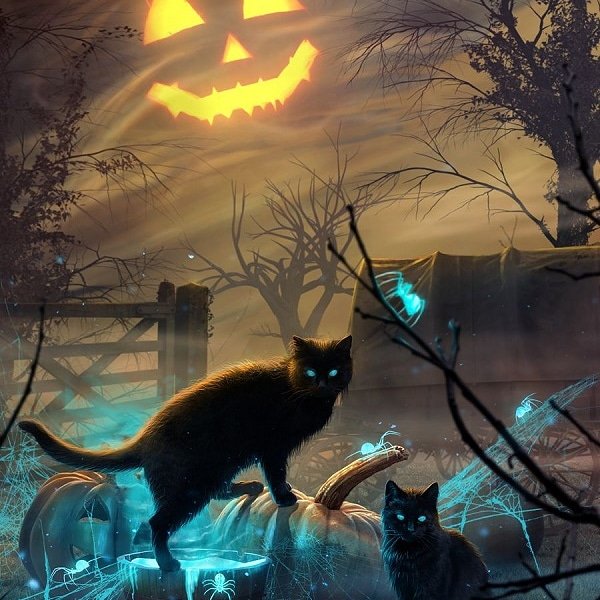
Artist: JayGraphixx
Social Media: www.instagram.com/jaygraphixx/
To view more of his art, please go here:
https://www.deviantart.com/jaygraphixx


You must be logged in to post a comment.