Spooky Sundays: Lord Byron – The Darkness

Spooky Sundays are all about reading, relaxing, and recharging our brooms.

Darkness is gothic poem of apocalyptic dream where the world succumbs to darkness, despair, and death after the sun and the stars are extinguished. 

The poem was likely inspired by climate event known as The Year without a Summer in 1816, when an ash cloud from an Indonesian volcanic eruption spread across Europe killing crops and causing by food shortages. The poem is metaphor for humans losing hope for goodness and light when darkness takes hold. Seemed fitting poetry for current events.

Lord Byron painted by Richard Westall 1812.

Darkness
by Lord George Gordon Byron
(July 18
16)

I had a dream, which was not all a dream.
The bright sun was extinguish’d, and the stars
Did wander darkling in the eternal space,
Rayless, and pathless, and the icy earth
    Swung blind and blackening in the moon­less air; 
Morn came and went–and came, and brought no day,
And men forgot their passions in the dread
Of this their desolation; and all hearts
Were chill’d into a selfish prayer for light:
    And they did live by watchfires–and the thrones,
The palaces of crowned kings–the huts,
The habitations of all things which dwell,
Were burnt for beacons; cities were consumed,
And men were gather’d round their blazing homes
To look once more into each other’s face;
    Happy were those who dwelt within the eye
Of the volcanos, and their mountain-torch:
A fearful hope was all the world contain’d;
Forests were set on fire–but hour by hour
    They fell and faded–and the crackling trunks
Extinguish’d with a crash–and all was black.
The brows of men by the despairing light
Wore an unearthly aspect, as by fits
The flashes fell upon them; some lay down
    And hid their eyes and wept; and some did rest
Their chins upon their clenched hands, and smiled;
And others hurried to and fro, and fed
Their funeral piles with fuel, and look’d up
With mad disquietude on the dull sky, 
The pall of a past world; and then again
With curses cast them down upon the dust,
And gnash’d their teeth and howl’d: the wild birds shriek’d
And, terrified, did flutter on the ground,
And flap their useless wings; the wildest brutes
Came tame and tremulous; and vipers crawl’d
And twined themselves among the multitude,
Hissing, but stingless–were slain for food.
And War, which for a moment was no more,
Did glut himself again:–a meal was bought
With blood, and each sate sullenly apart
Gorging himself in gloom: no love was left;

All earth was but one thought–and that was death
Immediate and inglorious; and the pang
Of famine fed upon all entrails–men
Died, and their bones were tombless as their flesh;
The meagre by the meagre were devour’d,
Even dogs assail’d their masters, all save one,
And he was faithful to a Gorse, and kept
The birds and beasts and famish’d men at bay,
  Till hunger clung them, or the dropping dead
Lured their lank jaws; himself sought out no food,
But with a piteous and perpetual moan,
And a quick desolate cry, licking the hand
Which answer’d not with a caress–he died.
The crowd was famish’d by degrees; but two
Of an enormous city did survive,
And they were enemies: they met beside
The dying embers of an altar-place
Where had been heap’d a mass of holy things
For an unholy usage; they raked up,
And shivering scraped with their cold skeleton hands
The feeble ashes, and their feeble breath
Blew for a little life, and made a flame
Which was a mockery; then they lifted up
Their eyes as it grew lighter, and beheld
  Each other’s aspects–saw, and shriek’d, and died–
Even of their mutual hideousness they
Unknowing who he was upon whose brow
Famine had written Fiend. The world was void,
  The populous and the powerful was a lump,
Seasonless, herbless, treeless, manless, lifeless,
A lump of death–a chaos of hard clay.
The rivers, lakes, and ocean all stood still,
And nothing stirr’d within their silent depths;
Ships sailorless lay rotting on the sea,
And their masts fell down piecemeal: as they dropp’d
They slept on the abyss without a surge
The waves were dead; the tides were in their grave,
The moon, their mistress, had expired before;
The winds were wither’d in the stagnant air,
And the clouds perish’d; Darkness had no need
Of aid from them–She was the Universe.

The Last Man painted by John Martin 1849

~~~~~

To read more poems from Lord Byron, check out the Poetry Foundation.

Happy World Storytelling Day!

I always love March because it gives me a chance to mention my favorite spooky creature, the headless horseman. You mean the guy from that story with Ichabod? Yes, that guy! The Legend of Sleepy Hollow written by Washington Irving was most likely inspired by the legendary Dullahan, a menacing spectre of Irish lore, that travels the countrysides of Ireland and Scotland, collecting souls of the recently departed.

The Dullahan is a demonic fairy or wicked hobgoblin, often accompanied by a wailing banshee, and typically depicted riding a black horse, carrying his head under one arm and a whip made of boney human spine in the hand of the other. When the Dullahan calls out your name, death is nigh. It’s also said that just hearing or seeing the Dullahan is an omen that a death in the family is immenient.

Sometimes, the headless horseman is drives a silent black carriage, known as the coiste bodhar (Ireland) or the hell wain (Scotland), which is led by six black horses and emerges out of nowhere from the dark night sky. Legend says once the death coach sets out, it can never return empty, but if you carry even a single gold coin in your pocket, you have nothing to fear, for supposedly, any item made of real gold can send the Dullahan away. However, if you steal the entire pot of fairies’ gold, well…look to the skies.

Of all the Irish legends, the story of the Dullahan is by far the scariest, again, inspiring the legendary Headless Horseman of Sleepy Hollow and countless other stories, books, movies, comics, video games, you name it. There are four movies featuring the Dullahan or coiste bodhar, the banshee, and other creatures that I absolutely adore and highly recommend. Be sure to move these into your queue:

Walt Disney’s Adventures of Ichabod and Mr. Toad, 1949

Tim Burton’s Sleepy Hollow, 1999

Darby O’Gill and the Little People

The Phantom Carriage, 1921 (silent)

St Patrick’s day may have past, but we can keep the mythical stories of Irish folklore alive all year long.

7 Gifts That Don’t Suck for Vampire Fans

Kicking off the 2022 Christmas gift-giving guide season with 7 gifts that don’t suck for vampire fans. Vampire fans are a picky bunch and luckily, there are numerous gift ideas that will quench their bloodlust and won’t break the bank.

Bleeding Skull Candles

Bleeding candles are all the rage. Something Different Vampire Blood Tears out of the UK sells taper candles online or through Amazon, or you can try these bleeding skull candles from Gute, which look even cooler.

Bleeding skull candles from Gute

Gothic Black or Purple Damask Throw Pillows

These beautiful gothic throw pillows designed by Teri Sherman and sold through Redbubble are easy ways for vampire fans to goth up a regular couch or bed. Sold in black, purple, and red.

Coffin Ring

Nothing says I’ll love you forever like a coffin ring made of Onyx from Blood Milk Jewels. Of course, there are cheaper alternatives out there for people on a budget, or pricer options, for those looking to get even more serious.

Vampire Capes

Capes are in! Okay, well, long capes like this Black and Red Reversible Cape from the Pyramid Collection is still tricky fashion and better suited for costumes, but short black capes and ponchos are definitely a thing. They go with everything from little black dresses to jeans and boots, and they keep little black hearts warm.

Bela Lugosi Collection from Creepy Co.

Bela Lugosi has an entire line of officially licensed and trademarked clothing and merch sold online through Creepy Co., which offers a number of officially licensed horror collections. Thanks to his business savvy and vigilant family, Bela Lugosi is practically synonymous with his most famous role, Dracula, the 1931 film from Universal Pictures, and I’m all for keeping that legend going. From pins to patches, socks to t-shirts, and my personal favorite, the poster pajama set, surely there is something here for vampire fans of all ages and types.

Wine Gifts from Vampire Vineyards

Vampire Vineyard won the domain name game over vampire.com and successfully trademarked a number of vamp names and images to use with their brand. Their single wines come with a cute little Vampire Wine Cape and are actually quite tasty. Vampire offers a broad range of wine, food gifts, and other merch. Everyone knows wine is the true elixir of life, so vampire fans can relax with a bottle and stop worrying over whether their blood types match.

The Vampira Diaries, 1954-1956 Book by Jonny Coffin

Maila Nurmi a.k.a Vampira, the first inspiration for all the mistresses of the dark that followed, had a bit of a rough life and it’s hard to be supportive of her legacy when there’s next to no official merchandise out there. That’s why this limited edition pre-order coffee table book to celebrate her life is so important. Authored by the eccentric Jonny Coffin, creator of the original Coffin Case, this is a chance for fans to learn a little more about the Original Glamor Ghoul and it’s sold directly through her official shop run by her family, which is nice. I hope they can capitalize on Vampira’s popularity and run a successful store. Btw, I hear only 1000 hand-stamped books will exist, so they’re likely to sell out fast.

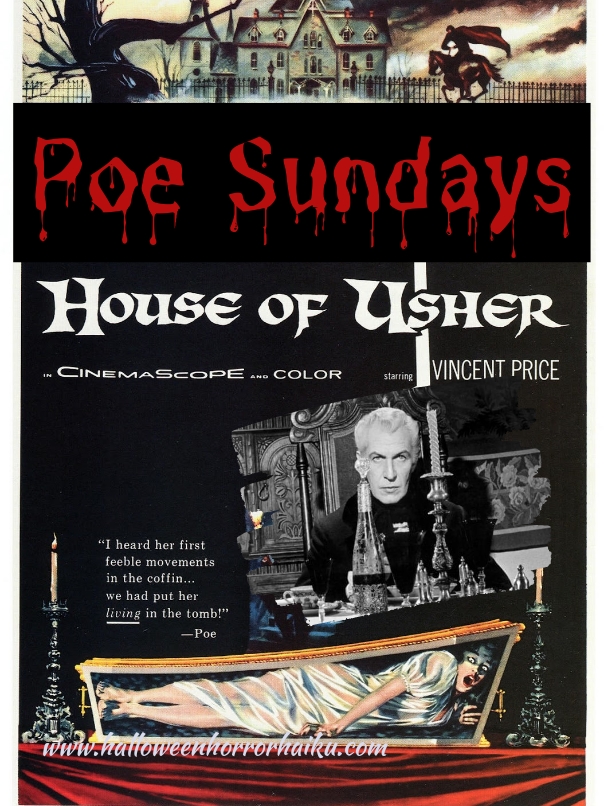
Poe Sundays – House of Usher

Every Sunday in October is Poe Sunday, the day we celebrate the Master of Macabre, Edgar Allan Poe. This year, I’ll suggest the best movie adaptations of Poe’s work.

Atmospheric and spooky, House of Usher may be the best most faithful Poe story adaption that director Roger Corman ever created. Vincent Price, Mark Damon, and Myrna Fahey, earnestly chew through Richard Matheson’s screenplay so well, gothic drama oozing out of their pores in every scene, until that thrilling legendary cinematic end.

Hellmouth Movie Review

Strange Films

Hellmouth 2014

Hellmouth, Strange Films 2014

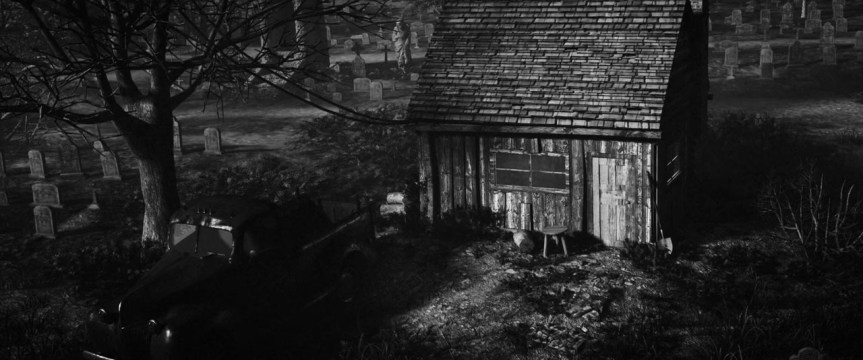
Director Joe Geddes teams up with Pontypool writer and lead actor Stephen McHattie for visually stunning spooky adventure about a terminally ill grave digger who travels to hell to rescue the beautiful woman he falls in love with.

This highly-stylized CGI endeavor pays homage to 1950’s horror and sci-fi cinema, but lacks the campy fun of any such movies. Truth is this is more of an offbeat fantasy drama than horror and it takes itself quite seriously, which would have been fine if the story had made any sense. Despite the eye-popping visuals, the movie slogs along without actually going anywhere, which is a real shame for Stephen McHattie, who does a fine job playing Charlie Baker, a graveyard caretaker suffering from episodic pran disease (brain clunk). In addition to his head pounding pain, Charlie endures daily harassment from local children and starts to notice some bizarre vandalism happening in the cemetery. Problem is Charlie can’t be sure if this isn’t all an illusion. Charlie is tired of looking after the dead and wants to move to Florida, but after a visit from his employer, Charlie learns he’ll have to delay retirement for reasons not entirely clear and inherits a box with a mysterious map, which he can’t stand more than 10 feet away from. While on an afternoon drive, he meets an alluring woman named Fay, who is running away from an unseen force. The two quickly fall in love and Hell doesn’t seem to like it very much. Fay disappears just as quickly as she showed up. 

Hellmouth, Strange Films 2014

The movie then introduces a subplot involving a squirrelly policeman on the hunt for two dangerous escaped criminals from the local insane asylum. The copper tells Charlie several small and strange tales of the cemetery’s more notorious residents. These small stories are perhaps the most interesting part of the whole movie. Unfortunately, the escaped criminals storyline goes nowhere fast, and soon after, Charlier Baker uses the mystery map to find his way into Hell, where he battle the forces of evil to win back his beloved Fay.

Hellmouth, Strange Films 2014

Unfortunately, the Sin City-style visuals and amazing set design are not enough to carry this one. I didn’t really have any problem with any of the other actors, particularly Julian Richings, who I felt was criminally underused here, but the characters needed more fleshing out and more clarity to their relevance to the main story. The end is one big beautiful muddled mess.

Hellmouth, Strange Films 2014

Horror fans won’t find any scares here, but for those who want weirdness and to witness some really cool visuals, this one’s for you.

Haiku of the Week

Happy Valentine’s Day! Our theme this month is love and death.

Haiku of the Week

whisper sweet nothings
lovers side by side
graveyard valentine

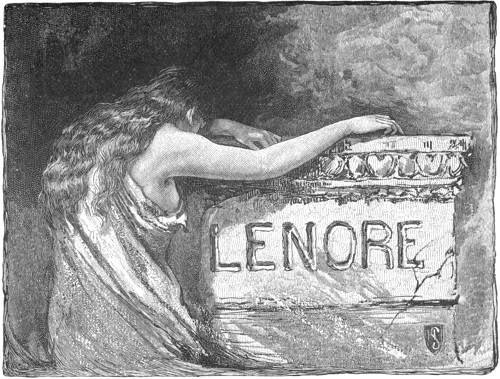
Poe Sundays: Lenore

Lenore
by Edgar Allan Poe
(published 1845)
**

Ah, broken is the golden bowl! — the spirit flown forever!
Let the bell toll! — a saintly soul floats on the Stygian river: —
And, Guy De Vere, hast thou no tear? — weep now or never more!
See! on yon drear and rigid bier low lies thy love, Lenore!
Come, let the burial rite be read — the funeral song be sung! —
An anthem for the queenliest dead that ever died so young —
A dirge for her the doubly dead in that she died so young.

“Wretches! ye loved her for her wealth and ye hated her for her pride;
And, when she fell in feeble health, ye blessed her — that she died: —
How shall the ritual, then, be read? — the requiem how be sung
By you — by yours, the evil eye — by yours the slanderous tongue
That did to death the innocence that died and died so young?”

Peccavimus; yet rave not thus! but let a Sabbath song
Go up to God so solemnly the dead may feel no wrong!
The sweet Lenore “hath gone before,” with Hope that flew beside,
Leaving thee wild for the dear child that should have been thy bride —
For her, the fair and debonair, that now so lowly lies,
The life upon her yellow hair, but not within her eyes —
The life still there upon her hair — the death upon her eyes.

“Avaunt! — avaunt! from fiends below the indignant ghost is riven —
From Hell unto a high estate far up within the Heaven —
From grief and groan to a golden throne beside the King of Heaven! —

Let no bell toll, then! — lest her soul, amid its hallowed mirth,
Should catch the note as it doth float up from the damnéd Earth!
And I — to-night my heart is light! — no dirge will I upraise,
But waft the angel on her flight with a Paean of old days!”

**Note: Poe’s first attempt to memoralize his true love came in 1831 with the poem “A Paean”. Poe revised the poem and published Lenore in 1843, and again in 1845. This revised and more widely used version ends with the line, King of Heaven! A Paean is now considered its own poem entirely.
Source: https://en.wikipedia.org/wiki/Lenore_(poem)

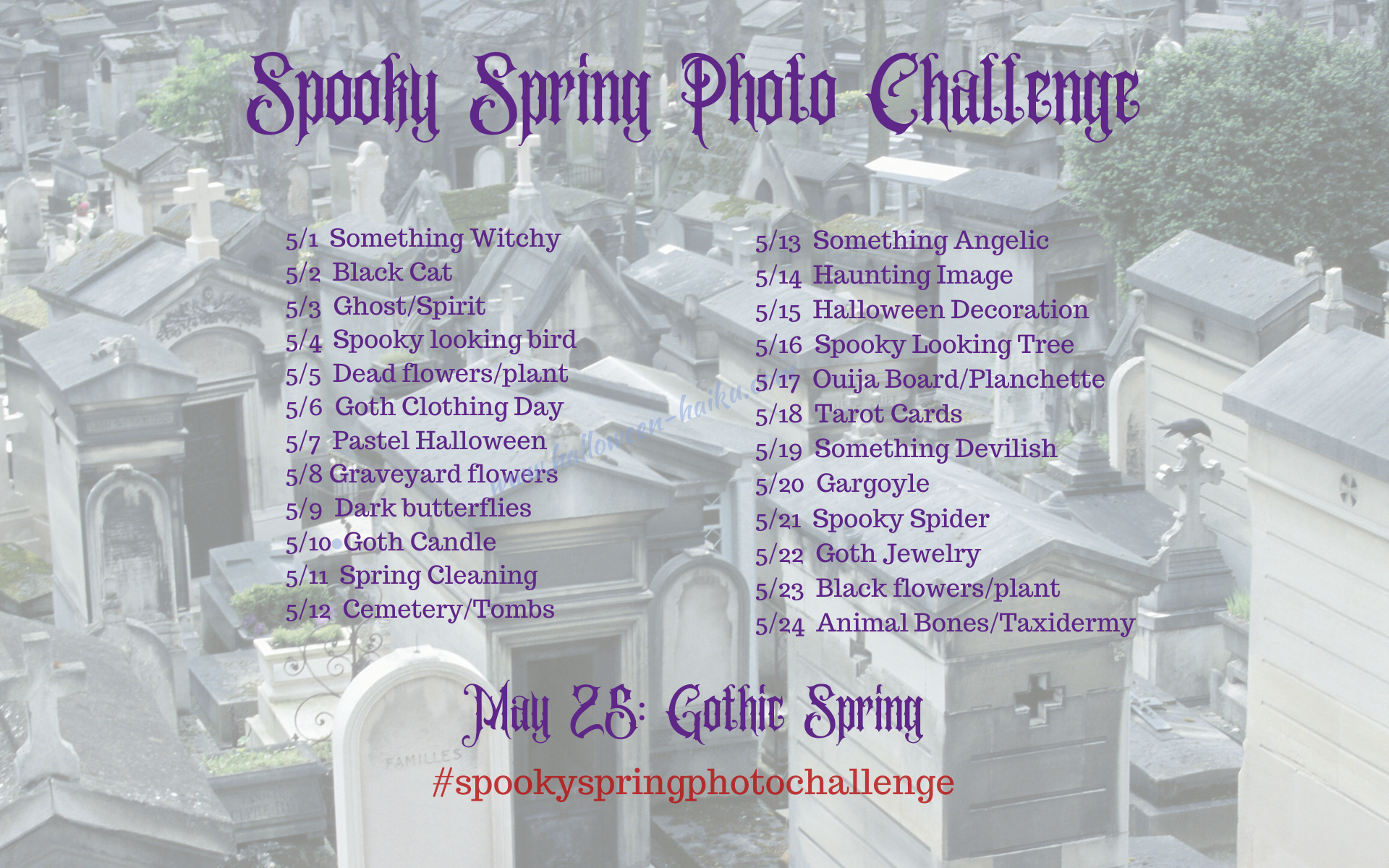
Spooky Spring Photo Challenge

Celebrating May Day with a 25-day photo challenge. Head on over to Instagram and post your favorite photos representing Spooky Spring. Join in any day!

Don’t forget to tag your pics using #spookyspringphotochallenge

HH Spooky Spring Photo Challenge Redux


Monthly Haiku Corner – February 2020

barbed wire

barbed wire
love takes no prisoners
eternally bound