

Title: Lake Mungo
Director: Joel Anderson
Starring: Rosie Traynor, Talia Zucker, David Pledger, Martin Sharper
Distributed by: Arclight Films
Running Time: 88 minutes
Since its release in 2008, the psychological thriller Lake Mungo consistently shows up in peoples’ top scary movies you’ve never seen lists. This was originally a movie that I skipped back in the day because it was a found footage horror like mega-hits The Blair Witch, 1999, or Paranormal Activity, 2007. Although hugely popular, I thought slow-burn, hand-held shaky cam stylized horror films had oversaturated the market in the 2000s and I grew tired of them. The only found footage gem to come from that era was the 2007 Spanish zombie film Rec.
Instead of in-your-face jump scares, slow-burn horror movies move at a snail’s pace and build up all the tension up front, usually for an hour and a half, all for one big giant scary payoff at the end. It’s a film technique that flat-out doesn’t work for some horror fans, particularly any with attention deficit disorders. After finding Lake Mungo on good ole Tubi, I decided to give it a try. After getting over my usual gripes about slow-burn, found-footage films, I began to appreciate Lake Mungo for what the film was really selling, death and existential dread.
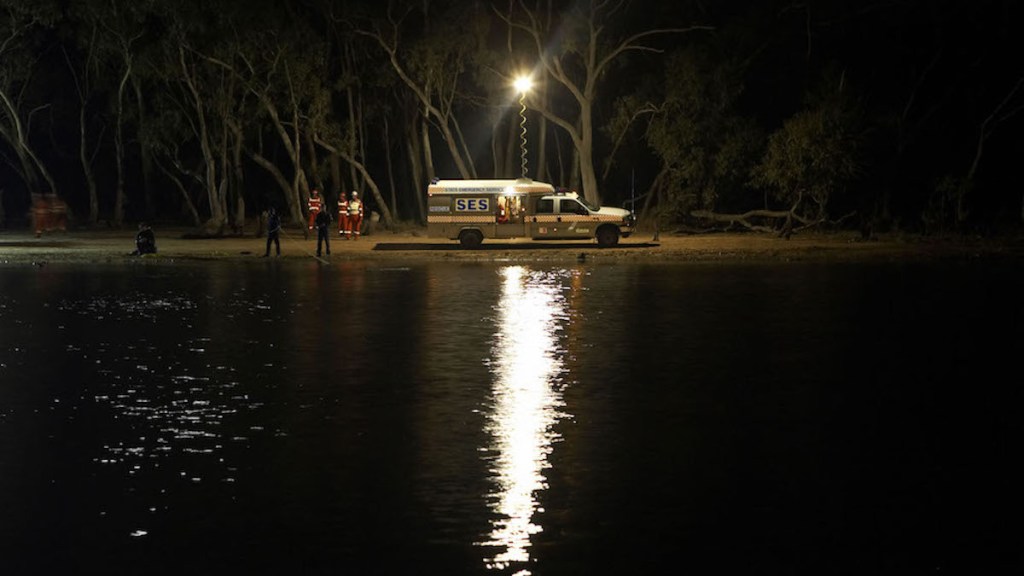
The movie starts with a typical Australian middle-class family living in Victoria suburbia of Ararat, explaining through documentary-style interviews and shared family and police photos and videos, how the recent mysterious loss of their teenage daughter Alice has devastated their family.
Watching a family grieve is never fun. Audiences are immediately thrust into one family’s nightmare scenario and it’s here where the excellent casting becomes one of the most brilliant things about Lake Mungo. Thanks to these strong unassuming low-key performances, the beginning is utterly depressing. It feels like you’re watching a documentary about a real family mourning their daughter, sister, and friend, a beautiful, cheerful girl living what we think is the perfect life. The painful agony of tragically losing a loved one hits hard, yet, boredom might set in for anyone who hasn’t experienced any such loss.
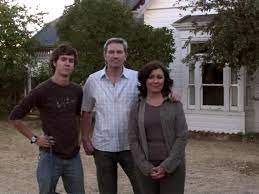
Eventually, evil starts to seep into the family’s photographs and found footage as the movie progresses. Through police photos, we learn what Alice’s father Russell saw when he identified Alice’s body but Alice’s mother June couldn’t bring herself to look, which leads to her not finding closure. Later, a particularly agonizing stunt pulled by her grieving son Matthew, who is also dealing with his sister’s death in a different way, prompts June to begin questioning whether her daughter is actually dead.
In her quest, June meets a psychic Ray who may hold the key to understanding Alice’s untimely demise. June and the family uncover truths about Alice’s double life and clues leading them back to the source of evil at Lake Mungo.
In his feature-length writing and directorial debut, Joel Anderson makes all the smart choices in mixing documentary-style interviewing, showing photographs, and found footage video to tell his story. While some shots are repeated, and there are a few red herrings, no scene is wasted. You’re constantly fed new information and you’ll start scouring the screen looking for ghosts or signs of the paranormal. The tension towards the end is agony because you know something is not right, but you’re not sure what it is. Be sure to watch through the credits as the extra photos confirm paranormal evidence.
Scariest scene:
Near the end, the big reveal of what Alice saw at Lake Mungo. It’s a subtle scare, one that takes a while for you to get creeped out.
 Halloween Horror Haiku